The jaw works almost continuously throughout the day. We talk, chew, yawn, and swallow hundreds of times without even noticing it. When the temporomandibular joint (TMJ) functions properly, all of these movements feel natural and comfortable. However, clicking sounds, pain, muscle tension, or limited jaw movement can sometimes appear.
These symptoms may be related to disorders of the temporomandibular joint (TMJ), the chewing muscles, or the bite. In these situations, it is worth scheduling a consultation with a dentist experienced in TMJ disorders and gnathology.
Who is a gnathologist?
A gnathologist is a dentist who specializes in the function of the chewing system, including the teeth, jaws, chewing muscles, bite, and temporomandibular joints.
The goal of the specialist is not only to identify where pain or discomfort occurs, but also to determine the possible cause of the dysfunction affecting the entire chewing system.
The problem may be related to malocclusion, missing teeth, excessive strain on the chewing muscles, bruxism, or other factors. That is why a comprehensive examination is an important part of making an accurate diagnosis.
When should you see a gnathologist?
You should not ignore symptoms that appear when moving your jaw. A consultation may be recommended if you notice:
- clicking or popping when opening or closing your mouth;
- pain or discomfort while chewing;
- a feeling of stiffness or limited jaw movement;
- difficulty opening your mouth wide;
- pain around the ear, temple, or jaw;
- frequent headaches with no obvious cause;
- constant tension or fatigue in the chewing muscles;
- noticeable tooth wear.
A single symptom does not necessarily indicate a serious condition. However, if discomfort keeps returning, becomes more noticeable, or interferes with everyday activities, it is better not to delay a consultation and undergo dental diagnostics in Kharkiv.
What problems can a gnathologist help identify?
A gnathologist evaluates the chewing system as a whole. During the examination, the dentist may identify disorders involving the temporomandibular joint, chewing muscles, or the way the upper and lower teeth work together.
TMJ disorders
The temporomandibular joint allows the lower jaw to move while talking, chewing, and opening the mouth. If its function is disrupted, clicking, pain, discomfort, or limited movement may occur.
Malocclusion
Improper alignment of the teeth can affect how chewing forces are distributed. In some cases, correcting these problems may require orthodontic treatment.
Overloaded chewing muscles
Constant tension in the chewing muscles may cause discomfort in the jaw, temples, or facial muscles. During the consultation, the dentist evaluates what may be causing this excessive muscle strain.
Bruxism and tooth wear
Excessive pressure on the teeth can gradually lead to tooth wear. When signs of excessive wear appear, it is important not only to evaluate the teeth themselves but also to identify the underlying cause.
Why should jaw problems not be ignored?
If jaw discomfort occurs regularly, it is important not to ignore it. Disorders affecting the chewing system may gradually influence chewing comfort, jaw mobility, and overall quality of life.
An early consultation helps evaluate the situation and determine whether treatment, monitoring, or additional diagnostic tests are needed.
It is especially important to seek evaluation if several symptoms occur together—for example, jaw clicking combined with pain, limited movement, or increased sensitivity in the chewing muscles.
What can cause TMJ problems?
There is no single cause of TMJ disorders. Various factors may affect the function of the jaw and chewing system, including:
- malocclusion;
- missing teeth;
- excessive pressure on the teeth;
- bruxism;
- overactive or strained chewing muscles;
- jaw injuries;
- uneven distribution of chewing forces.
If missing teeth have changed the way chewing pressure is distributed, a comprehensive treatment approach may be recommended. After diagnosis, the dentist may consider dental prosthetics or, when appropriate, dental implant treatment.
What happens during a gnathologist consultation?
The consultation begins with a detailed discussion of your symptoms and medical history. The dentist asks when the symptoms started, in which situations they occur, what makes them worse or better, and whether they have changed over time.
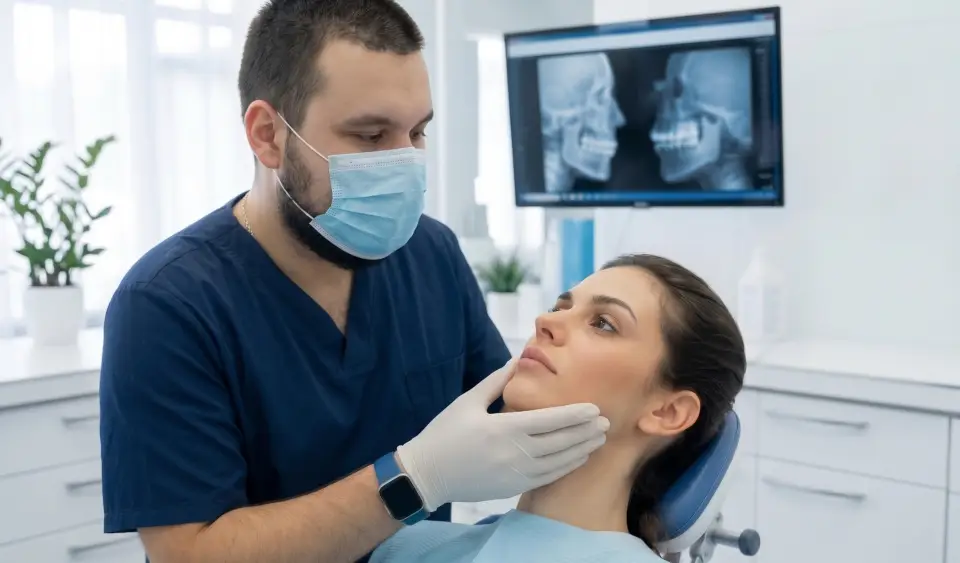
This is followed by a clinical examination. The dentist evaluates jaw movement, chewing muscles, the temporomandibular joints, and your bite.
If needed, additional diagnostic methods may be recommended. For example, the dentist may order dental X-rays or other imaging tests depending on your clinical situation.
After evaluating all the findings, the dentist prepares an individual treatment or follow-up plan.
Why is comprehensive diagnosis important?
The jaw and chewing system work as a single functional unit, so one symptom alone does not always reveal the underlying cause.
For example, discomfort around the temple or ear may have different causes. That is why it is important to evaluate not only the TMJ itself, but also the teeth, bite, chewing muscles, and other factors that affect how the entire system functions.
At FamiDent studio, we believe in a comprehensive approach: first identifying the cause of the problem, and then choosing the most appropriate treatment strategy.
Gnathology at FamiDent studio
At FamiDent studio in Kharkiv, we strive to make every stage of diagnosis and treatment clear and understandable for our patients. The dentist explains the examination results, answers your questions, and helps you understand the next steps.
If you experience jaw clicking, pain while chewing, tension in the chewing muscles, or other unusual sensations, do not try to diagnose the problem yourself. Start with a consultation with a dentist in Kharkiv.
Everyday comfort begins with the right diagnosis 💙
Your temporomandibular joint is involved in many everyday activities—from speaking to eating. Keeping it functioning comfortably and without pain is an important part of daily well-being.
Do not ignore symptoms that keep coming back. A timely consultation can help identify the cause of your discomfort and, if necessary, begin appropriate treatment.
FamiDent studio — caring for the health of your teeth, your bite, and the comfort of your smile.