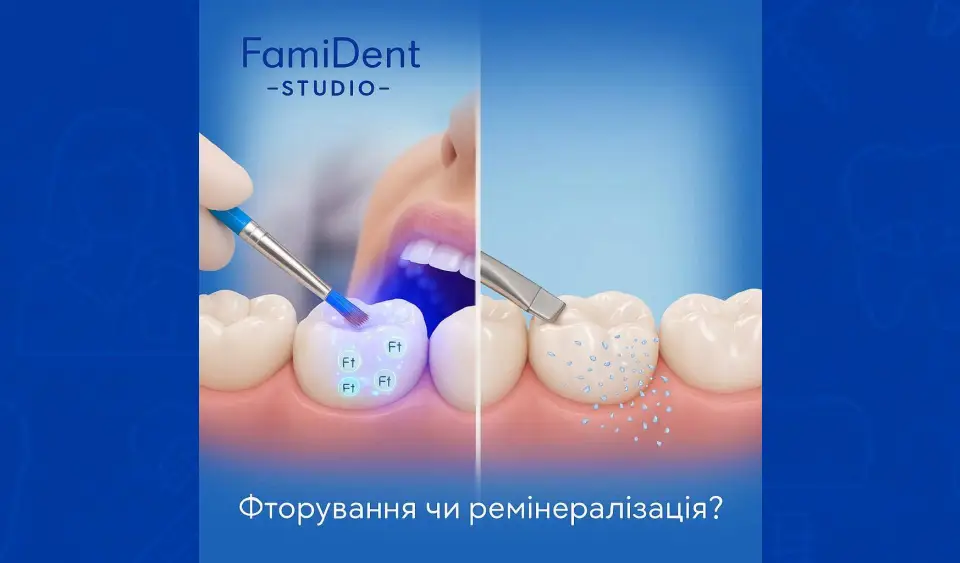
Dental health depends largely on the condition of the enamel. It is it that protects the teeth from bacteria, acids and other negative factors. To strengthen the enamel, dentists often recommend fluoridation or remineralization. Although these procedures have a similar goal, they work differently and are prescribed depending on the individual needs of the patient.
What is dental fluoridation?
Fluoridation is a preventive procedure that involves applying special fluoride products to the surface of your teeth. They help make your enamel more resistant to the acids and bacteria that cause tooth decay.
The main advantages of fluoridation:
- strengthening tooth enamel;
- reducing the risk of developing caries;
- protection of teeth from acid exposure;
- maintaining dental health after professional hygiene.
Who is fluoridation recommended for?
- children during the period of formation of permanent teeth;
- adults at high risk of developing caries;
- patients with tooth sensitivity;
- after professional teeth cleaning;
- after wearing braces or other orthodontic treatment.
What is tooth remineralization?
Remineralization is aimed at restoring the mineral composition of enamel. During the procedure, teeth are saturated with calcium, phosphorus, and other beneficial elements that help strengthen their structure.
Remineralization helps:
- restore initial enamel damage;
- reduce tooth sensitivity;
- slow down the development of caries in the early stages;
- improve the overall condition of the enamel.
When should you choose remineralization?
- when white spots appear on the teeth;
- with increased sensitivity to cold or hot;
- with dry mouth;
- after the teeth whitening procedure;
- at the first signs of enamel demineralization.
Which is more effective: fluoridation or remineralization?
There is no clear answer, as the choice depends on the clinical situation. In some cases, one procedure is enough for prevention, and sometimes the dentist recommends combining both methods to achieve maximum results.
Before prescribing treatment, the doctor assesses the condition of the enamel, the level of tooth sensitivity, and the risks of developing caries, after which he selects the most effective prevention plan.
Why is it important not to postpone prevention?
Regular dental care and timely preventive procedures help avoid many dental problems in the future. Strengthening enamel in the early stages allows you to maintain a healthy smile, reduce the risk of caries and avoid complex treatment.
Remember: the best way to maintain dental health is to have regular check-ups and follow your dentist's recommendations. Healthy teeth start with proper prevention.